One is a butterfly you have walked past a hundred times without noticing. The other is not a pollinator at all, and we will be honest about that. Both belong in a South Jersey yard that works.
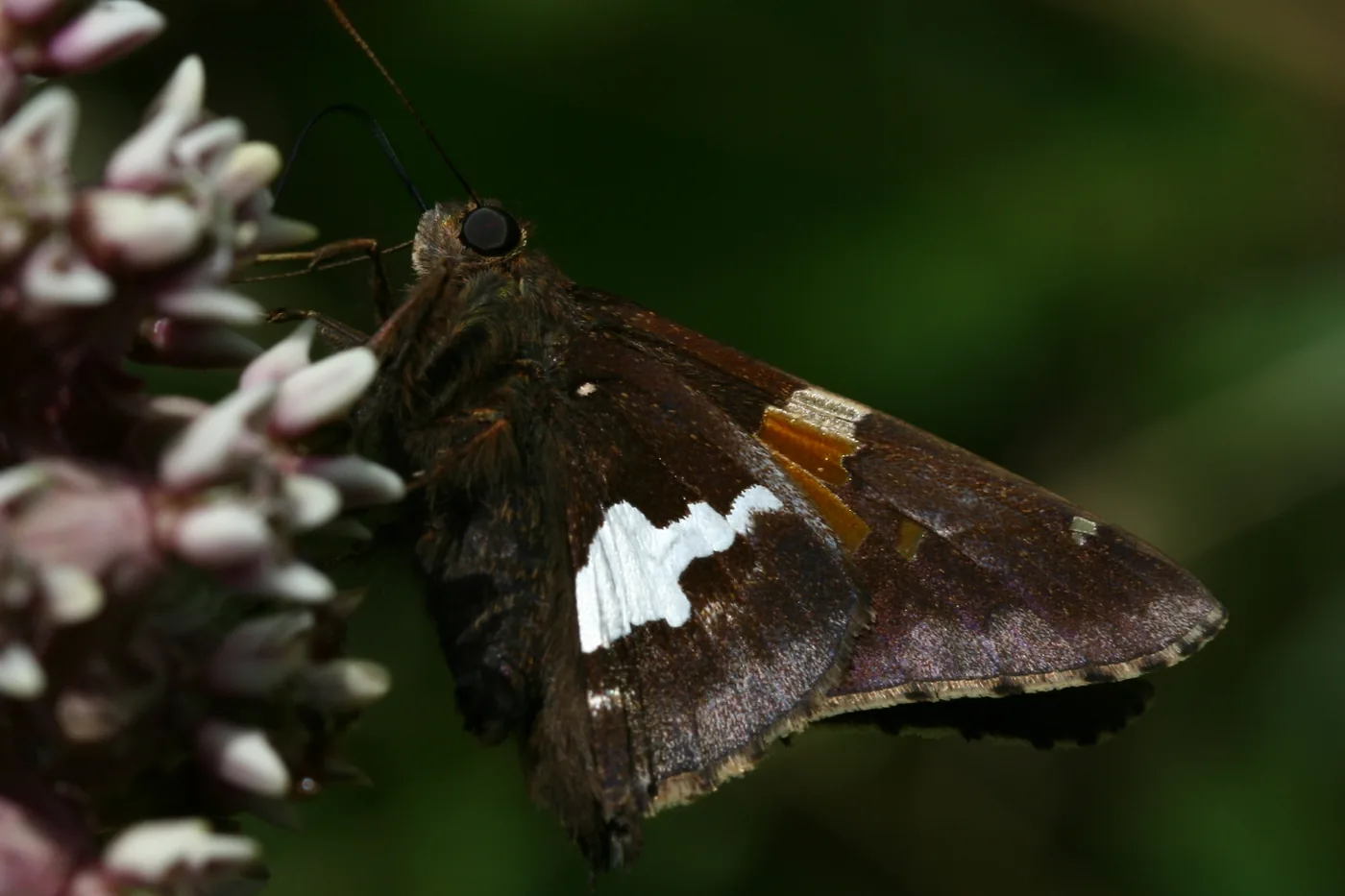
Family Hesperiidae
Small, stocky, big-eyed butterflies with a darting flight that gave them their name. Real pollinators, and the fastest-growing section of New Jersey's watch list.
A skipper is what most people dismiss as a moth: stout body, folded wings, brown and gold instead of monarch orange. Look closer and the field mark is the antennae, which end in little hooked clubs no moth has. They work flowers hard all season, carrying pollen from bloom to bloom the same way any butterfly does, just without the fan club.
The reason they are on this site is the list they are filling. New Jersey recently listed or uplisted a wave of butterflies, and skippers dominate it: the common roadside-skipper, dotted skipper, Leonard's skipper, pepper-and-salt skipper, and two-spotted skipper, alongside the Acadian hairstreak, gray comma, Georgia satyr, hoary elfin, northern metalmark, and silver-bordered fritillary. The checkered white and frosted elfin moved onto the endangered list, and the monarch is proposed for federal threatened status.
Why skippers in particular? Their caterpillars mostly eat grasses and sedges, the native warm-season kind that once covered old fields and Pine Barrens edges. Mow it all, treat it all, or lose it to development, and the skippers go with it, quietly, one tidy lawn at a time.
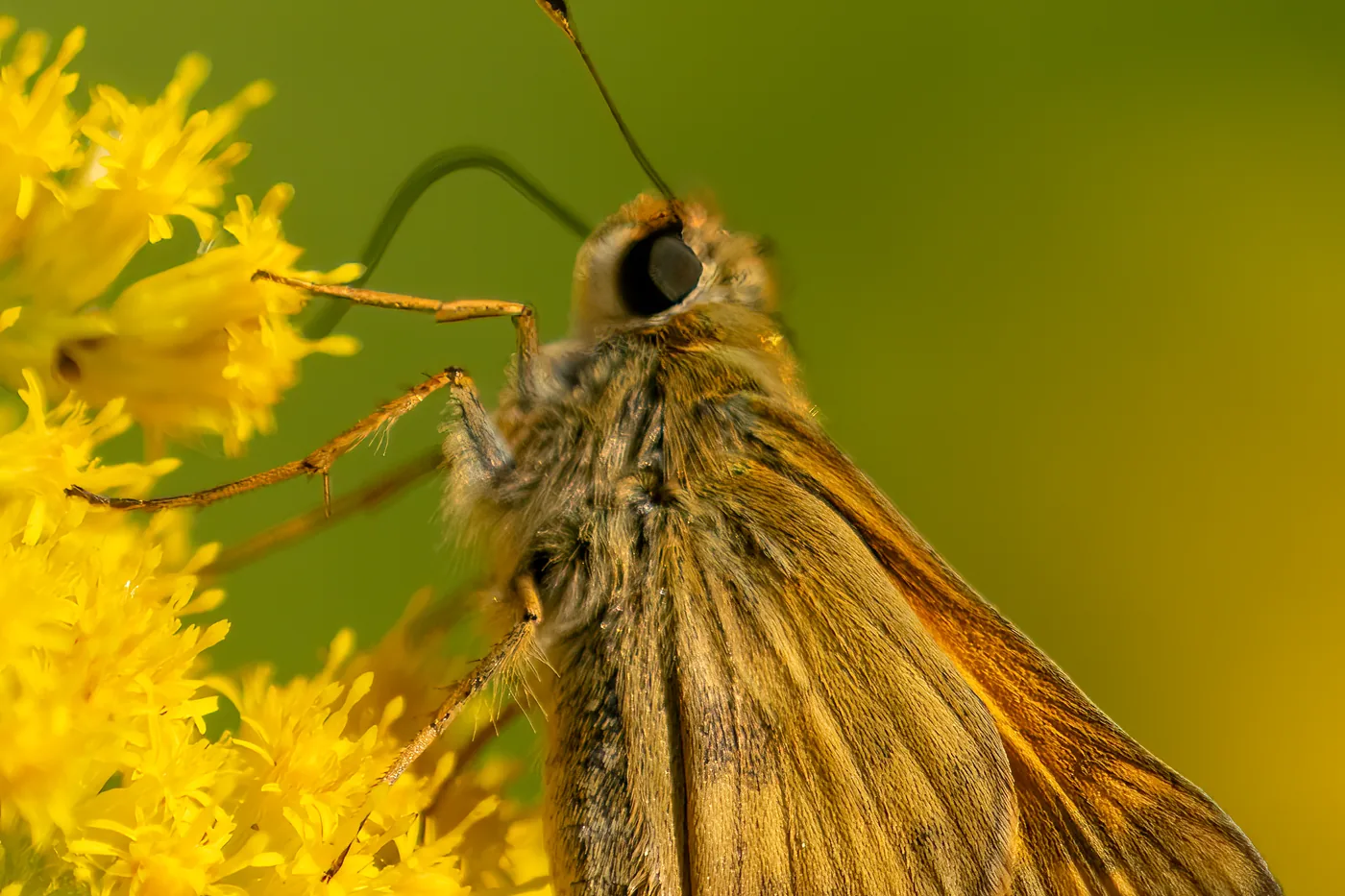
Photo: Rhododendrites, CC BY-SA 4.0, via Wikimedia Commons
| What they are | True butterflies, family Hesperiidae |
| Field mark | Hooked clubs on the antennae |
| Caterpillar food | Mostly native grasses and sedges |
| Pollinator? | Yes, all season long |
| NJ status | Five skippers newly listed or uplisted |
Dragonflies, suborder Anisoptera
Dragonflies visit no flowers and carry no pollen. We put them on a pollinator site anyway, and here is the honest case for it.
A dragonfly is a carnivore from start to finish. It begins as an underwater predator, hunting in ponds and slow water for months to years before it climbs a stem and becomes the fastest insect in the yard. The adult takes mosquitoes, gnats, and midges out of the air over your garden all day, dozens upon dozens of them, on wings that have been doing this for more than three hundred million years.
So why here? Because the same choices protect both. The barrier spray sold to kill mosquitoes kills the dragonflies that were already killing mosquitoes, along with the bees and caterpillars next door. Clean, unsprayed water and standing native plants raise dragonflies; poisoned water raises nothing. A yard managed for pollinators gets its air patrol free, and New Jersey has more than 180 dragonfly and damselfly species ready to take the job. Watch for the blue dasher, the common whitetail, and the eastern pondhawk, our reliable three.
Dragonflies are also honest witnesses. Their young cannot live in dirty water, so a pond with dragonflies rising from it is a pond that passed inspection.
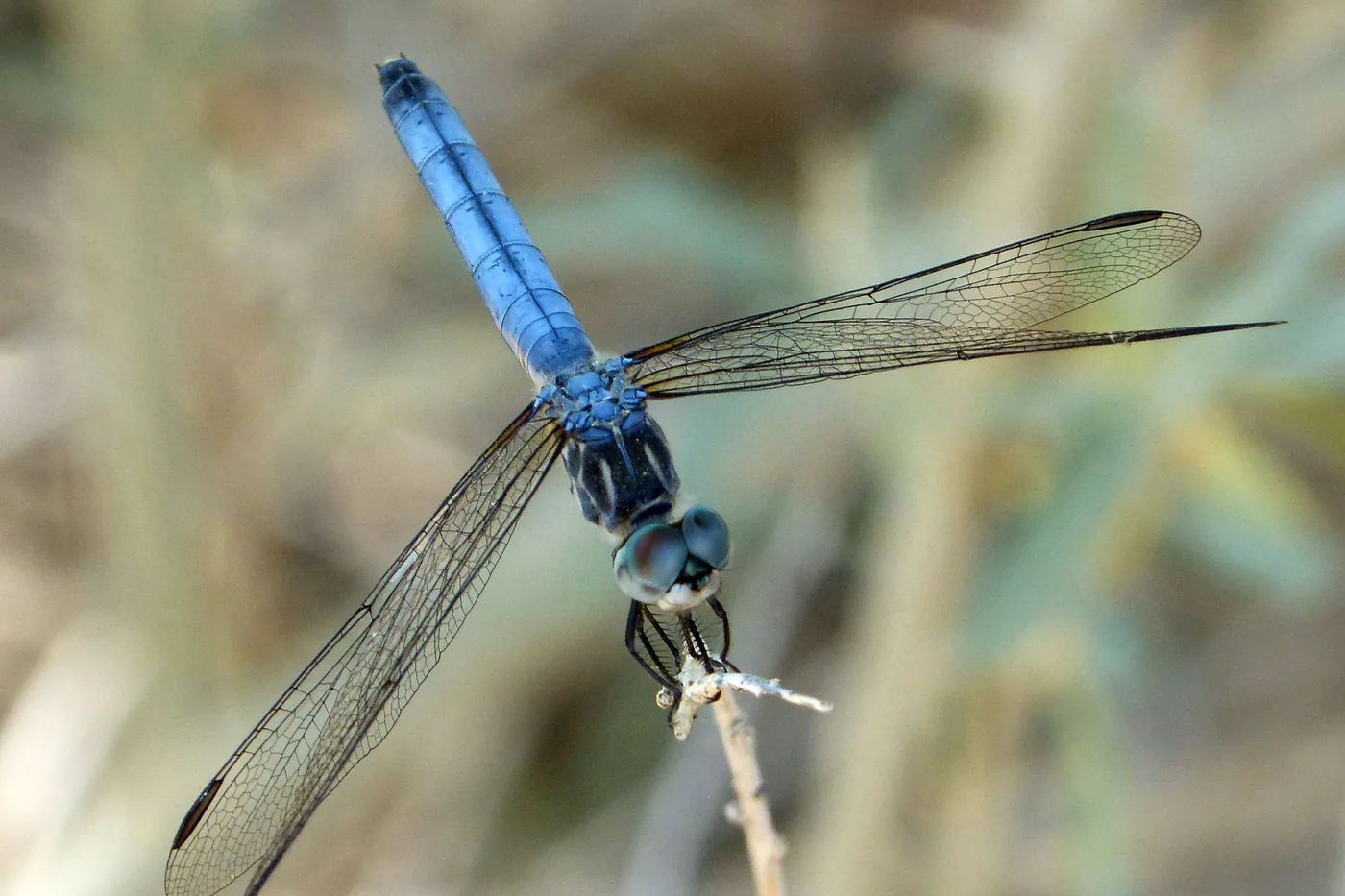
Photo: gailhampshire, CC BY 2.0, via Wikimedia Commons
| Flowers pollinated | Zero. They earn their keep another way |
| Diet | Mosquitoes, gnats, midges, on the wing |
| Young | Underwater predators, months to years |
| In the fossil record | More than 300 million years |
| NJ regulars | Blue dasher, common whitetail, eastern pondhawk |
Skippers need the grasses nobody plants on purpose. Dragonflies need the water nobody sprays. Both are cheap to give and easy to take away.
Every entry is native to our region. The grasses are the part most pollinator gardens forget: without them there is nowhere for a grass skipper to be a caterpillar.
| Plant | Season | What it does |
|---|---|---|
| Little bluestemSchizachyrium scoparium | Warm-season grass | The signature skipper nursery of dry, sandy South Jersey ground |
| SwitchgrassPanicum virgatum | Warm-season grass | Tall cover and caterpillar food; stands all winter |
| Purple lovegrassEragrostis spectabilis | Warm-season grass | Low, tough, at home in the sandiest yards we have |
| Mountain mintPycnanthemum muticum | July to September | The adult fuel stop; skippers stack up on it |
| Joe pye weedEutrochium species | July to September | Big landing pads for big fliers, damp ground |
| New England asterSymphyotrichum novae-angliae | August to October | Last nectar of the season for the late broods |
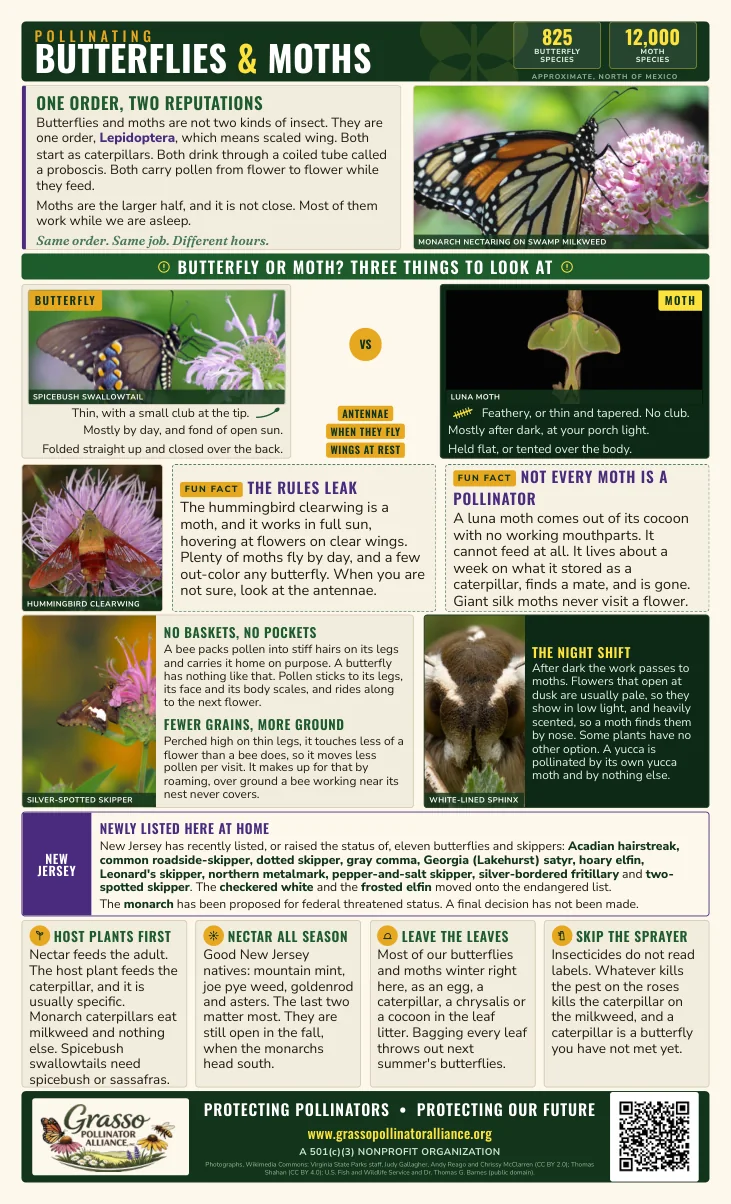
Skippers are butterflies, and this sheet covers them alongside the moths, including New Jersey's newly listed species. Tap the poster to view it full size, or download the PDF.
Every stand of little bluestem is a skipper nursery, and every unsprayed pond raises the air patrol. Help us plant more of both.
Donate Now