More than 350 wild species were pollinating New Jersey long before anyone kept a hive. No honey, almost never a sting, and most people cannot name five of them.
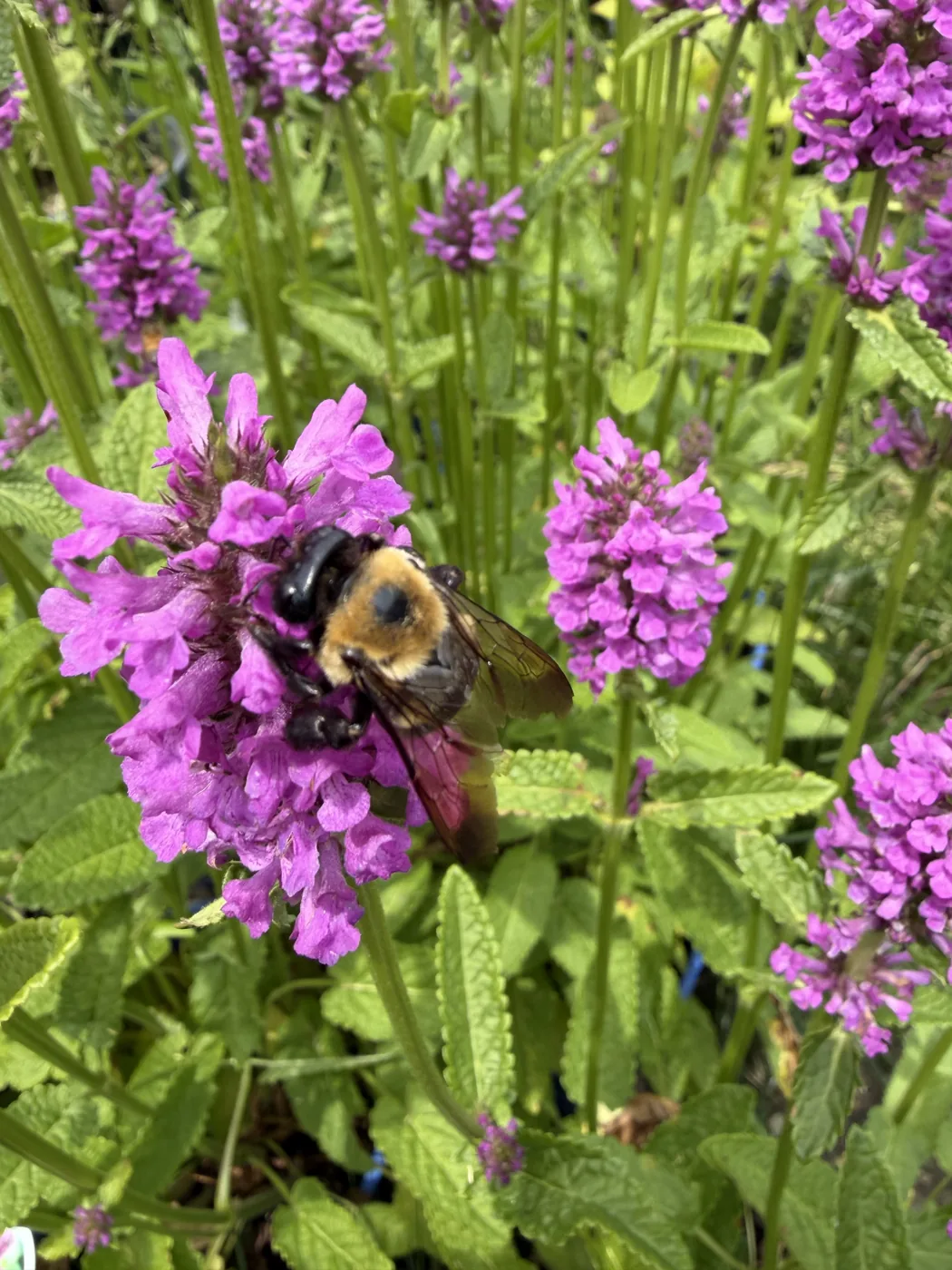
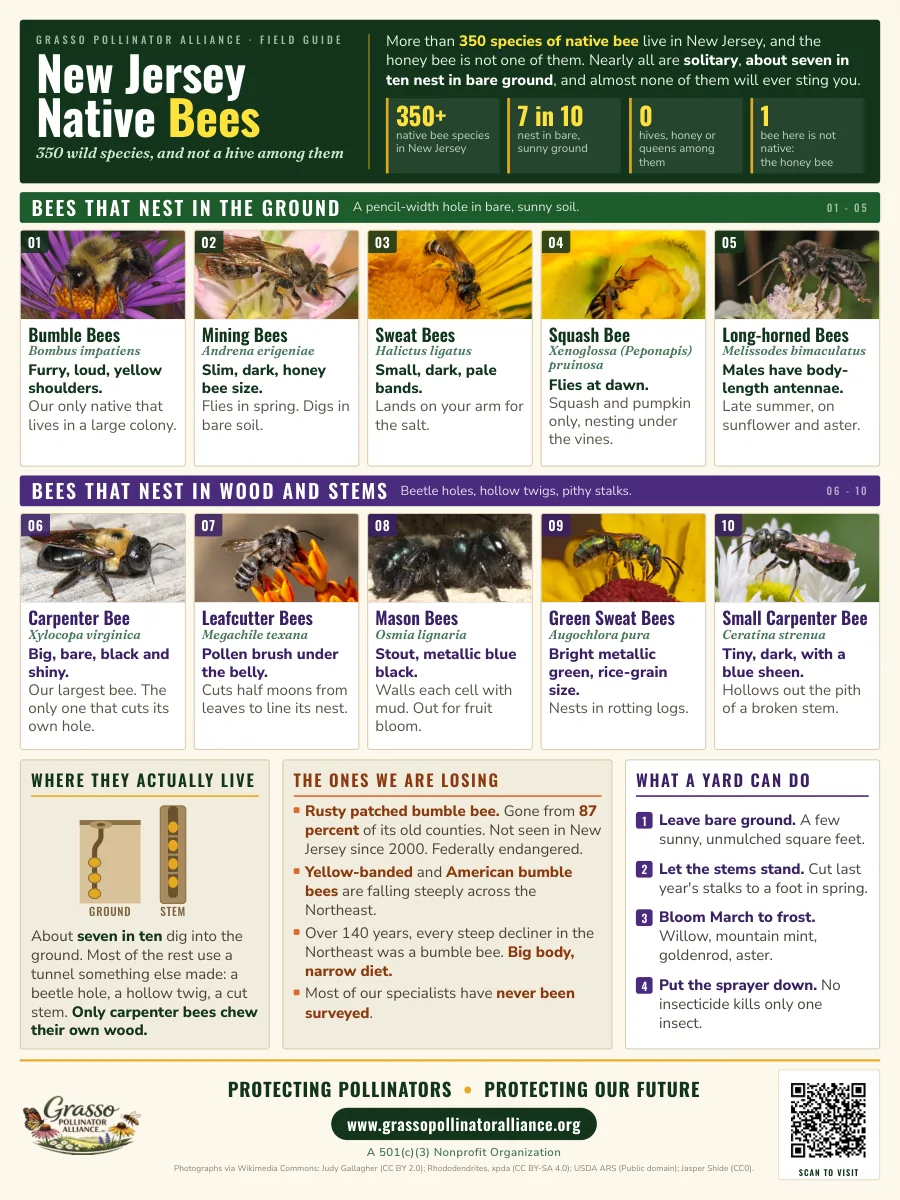
Most of what gets said about bees is about the honeybee, and the honeybee is not even native. Behind it stand more than three hundred and fifty wild species that hold New Jersey together: bumble bees, sweat bees, miner bees, leafcutters, masons, most of them nesting in bare ground and dead stems, many locked to a handful of plants. This page is theirs. The bees in our own hives have a page of their own.
Bumble bees, sweat bees, miner bees, leafcutters, masons
No hive, no honey, almost never a sting. More than three hundred and fifty species doing the quiet work New Jersey runs on.
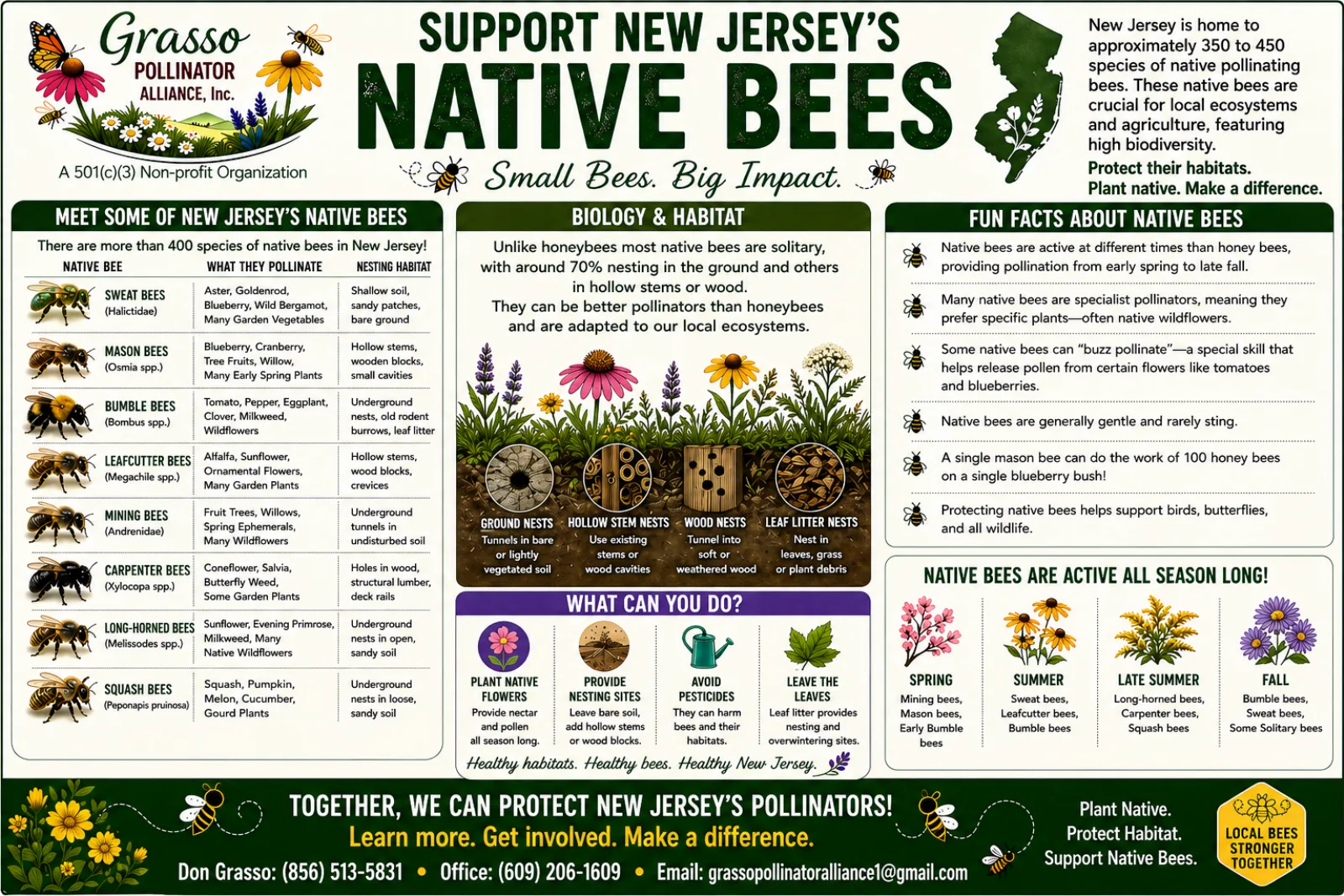
Most native bees live nothing like a honeybee. Around seven in ten nest in bare, sunny ground; most of the rest use hollow stems and beetle holes in dead wood. Nearly all are solitary, a single female provisioning her own nest, which is why a mulched-and-sprayed yard with nowhere to dig is empty of them no matter what it has in bloom.
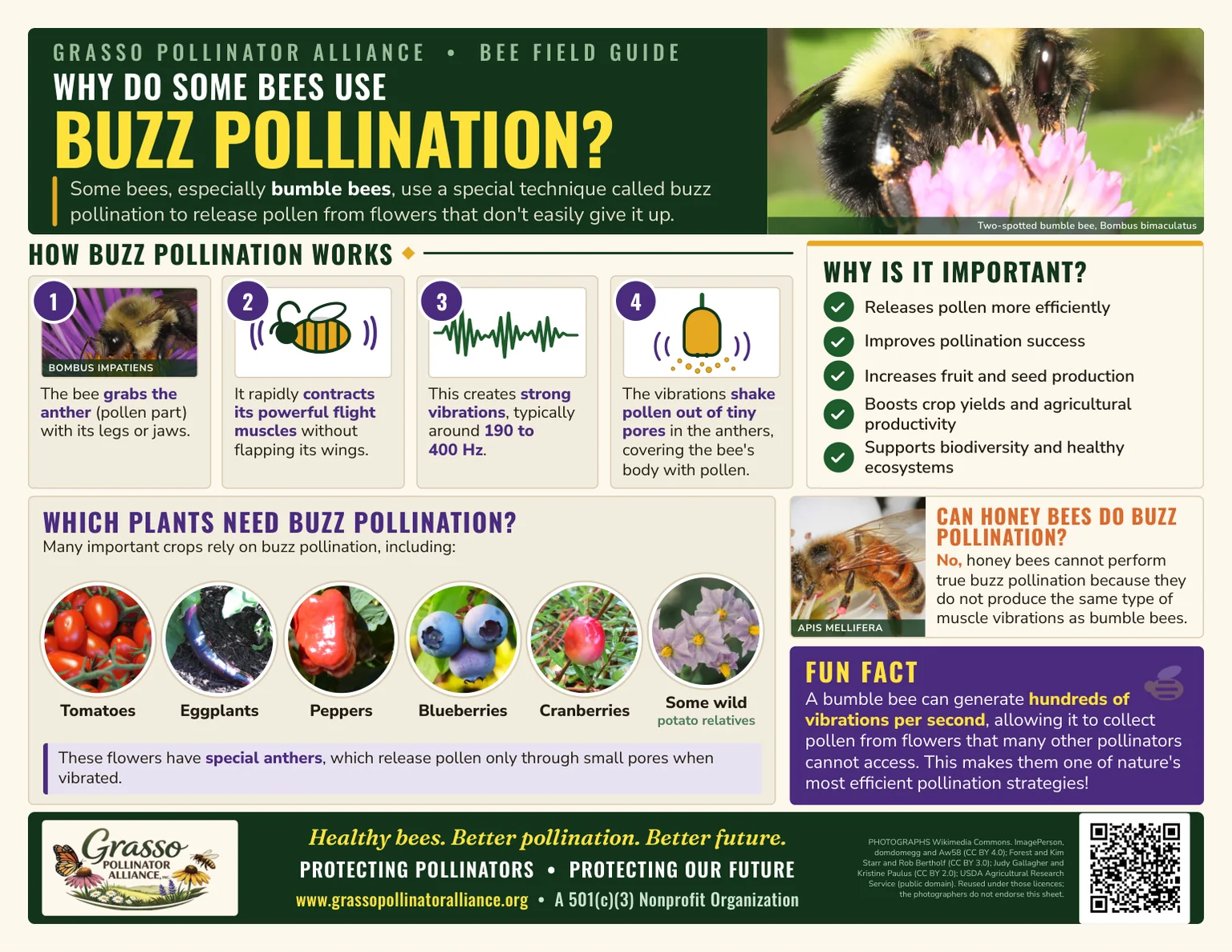
Some of them do things no honeybee can. Bumble bees grab a flower and buzz at just the right pitch to shake the pollen loose. Blueberries, our state's signature crop, are built for exactly that, which is why the wild bees in a blueberry field earn their keep alongside every rented hive.
And they come in colors nobody expects. The little bee in the photo is a sweat bee in polished metallic green, common in half the gardens in South Jersey and mistaken for anything but a bee. Three hundred and fifty species is a lot of ways to be a bee.
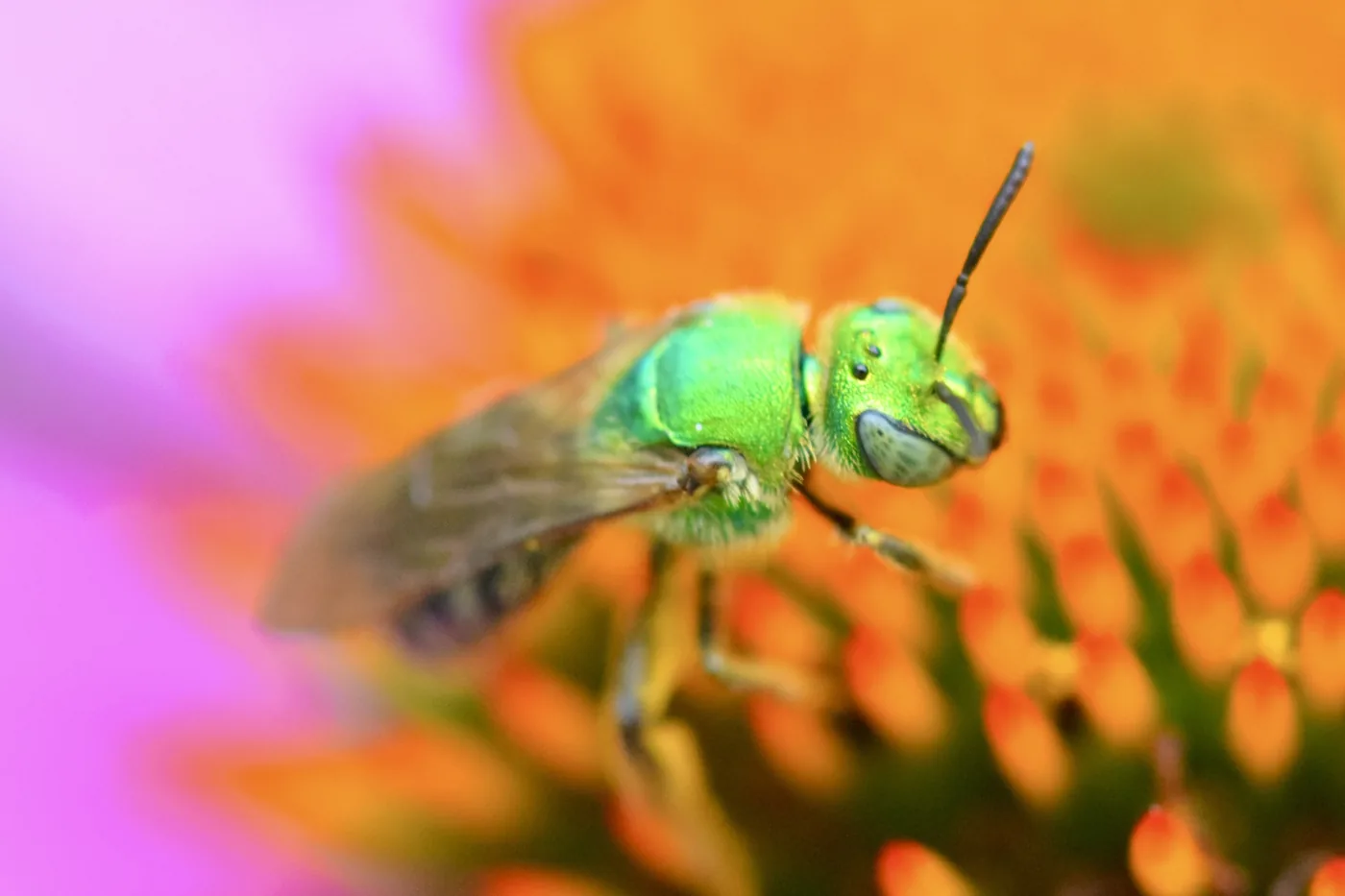
Photo: Bernie Paquette, CC BY 4.0, via Wikimedia Commons
| Species in NJ | More than 350 |
| Nesting | ~70% in bare ground |
| Social life | Mostly solitary |
| Signature skill | Buzz pollination |
| Best crop story | Wild bees carry NJ blueberries |
Bombus affinis, Bombus terricola, Bombus pensylvanicus
Decline is easier to ignore as a percentage. So here are the actual bees disappearing from New Jersey, by name.
The rusty patched bumble bee used to be common across this state. It is now federally endangered, has not been seen in New Jersey since 2000, and is gone from about 87 percent of the range it once held. The yellow-banded bumble bee has vanished from most of its US range since the late 1990s. The American bumble bee, once a fixture of open fields here, has taken steep losses across the Northeast and is now scarce in New Jersey.
Behind the bumble bees stands a quieter roll: specialist miner bees and the cuckoo bees that depend on them, declining from habitat fragmentation, introduced parasites, and pesticide load. Most are so little surveyed that nobody can say how bad it is, which is not the comfort it sounds like.
When a specialist bee goes, its plant loses its pollinator, and no rented hive fills that hole. The numbers behind bee decline, and how buzz pollination works, are both in our free printable Bee Field Guide.
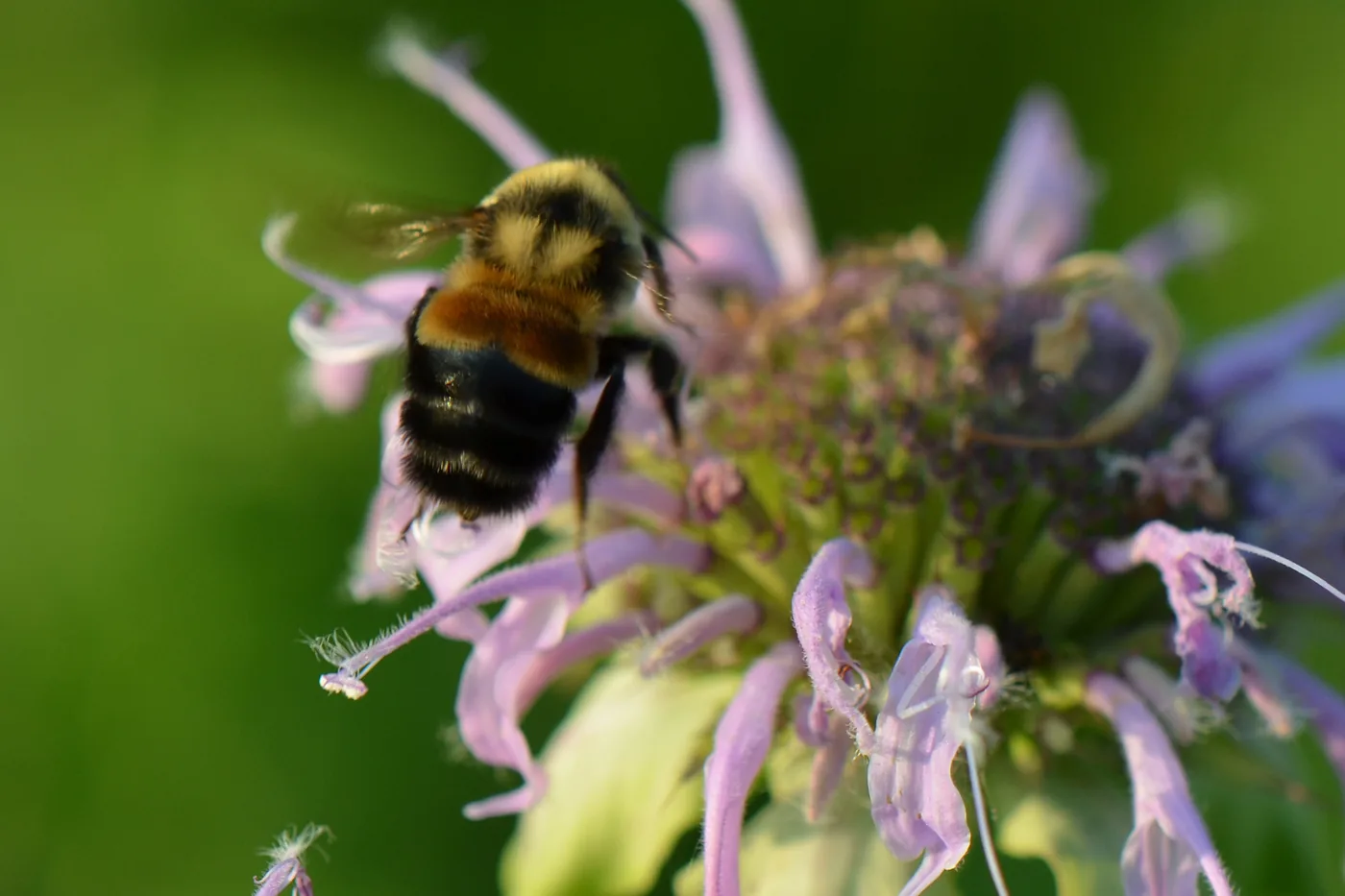
Photo: USFWS Midwest Region, CC BY 2.0, via Wikimedia Commons
| Rusty patched bumble bee | Endangered; last NJ record 2000 |
| Range lost | About 87% |
| Yellow-banded bumble bee | Gone from most of its US range |
| American bumble bee | Now scarce in the Northeast |
The plant list is half the answer. The other half is letting your yard be a place a bee can actually live, and that part costs nothing at all.
Every plant here is native to our region. Together they run from the first pollen of March to the last nectar before the new queens dig in for winter, with the specialists covered along the way.
| Plant | Blooms | What it does |
|---|---|---|
| Pussy willowSalix discolor | March to April | First pollen of the year, right when bumble bee queens wake up |
| Golden AlexandersZizia aurea | April to June | Carries the early season until summer arrives |
| Wild blue indigoBaptisia australis | May to June | Built for big bees; a bumble bee favorite |
| Wild bergamotMonarda fistulosa | June to September | Long summer bloom for long-tongued bees |
| Mountain mintPycnanthemum muticum | July to September | The most bee-visited plant we grow. Period |
| Partridge peaChamaecrista fasciculata | July to September | Buzz-pollinated, and it loves our sandy soil |
| GoldenrodSolidago species | August to October | Fall mainstay; feeds the specialist miner bees |
| New England asterSymphyotrichum novae-angliae | August to October | Last call before the new queens hibernate |
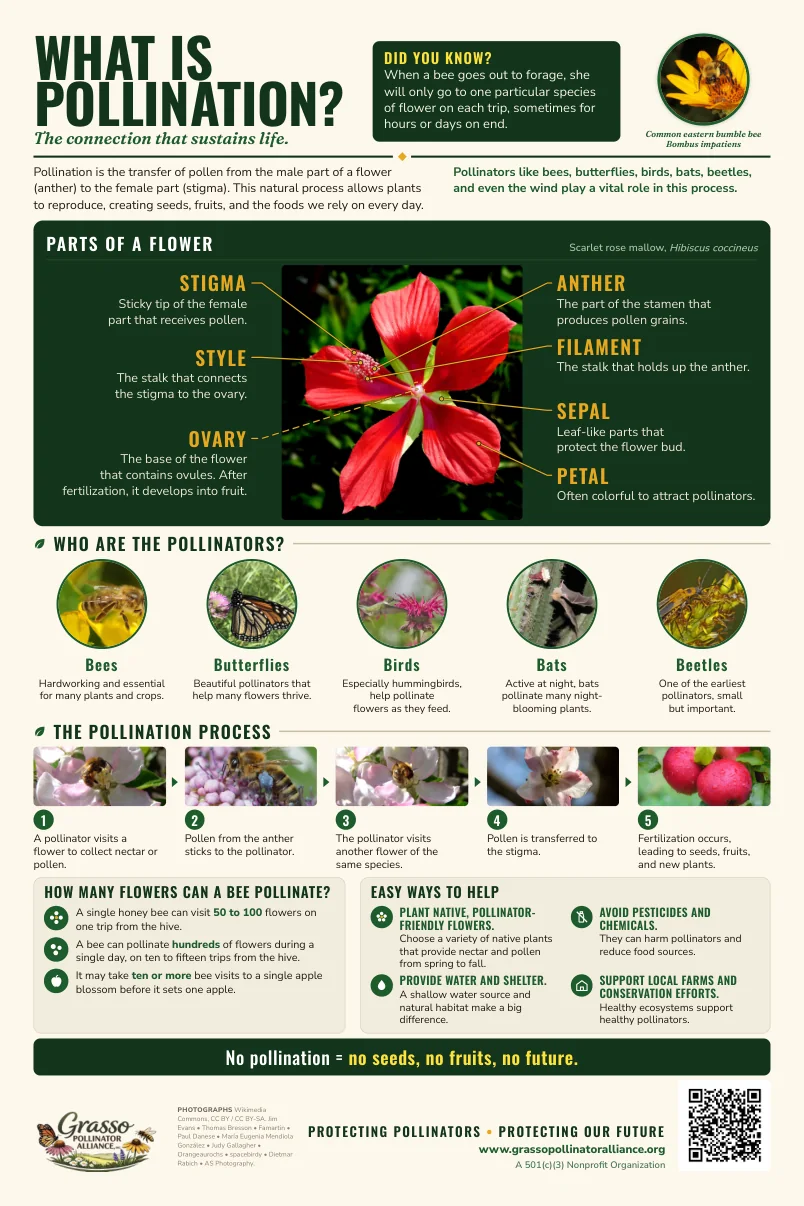
The New Jersey native bee field sheet, the pollination poster with a common eastern bumble bee at work, the buzz pollination one-pager and the state native bee chart. Tap a poster to view it full size, or download the PDF.
Every unsprayed native planting is forage, and every bare sunny patch is a nest site. Help us build more of both.
Donate Now