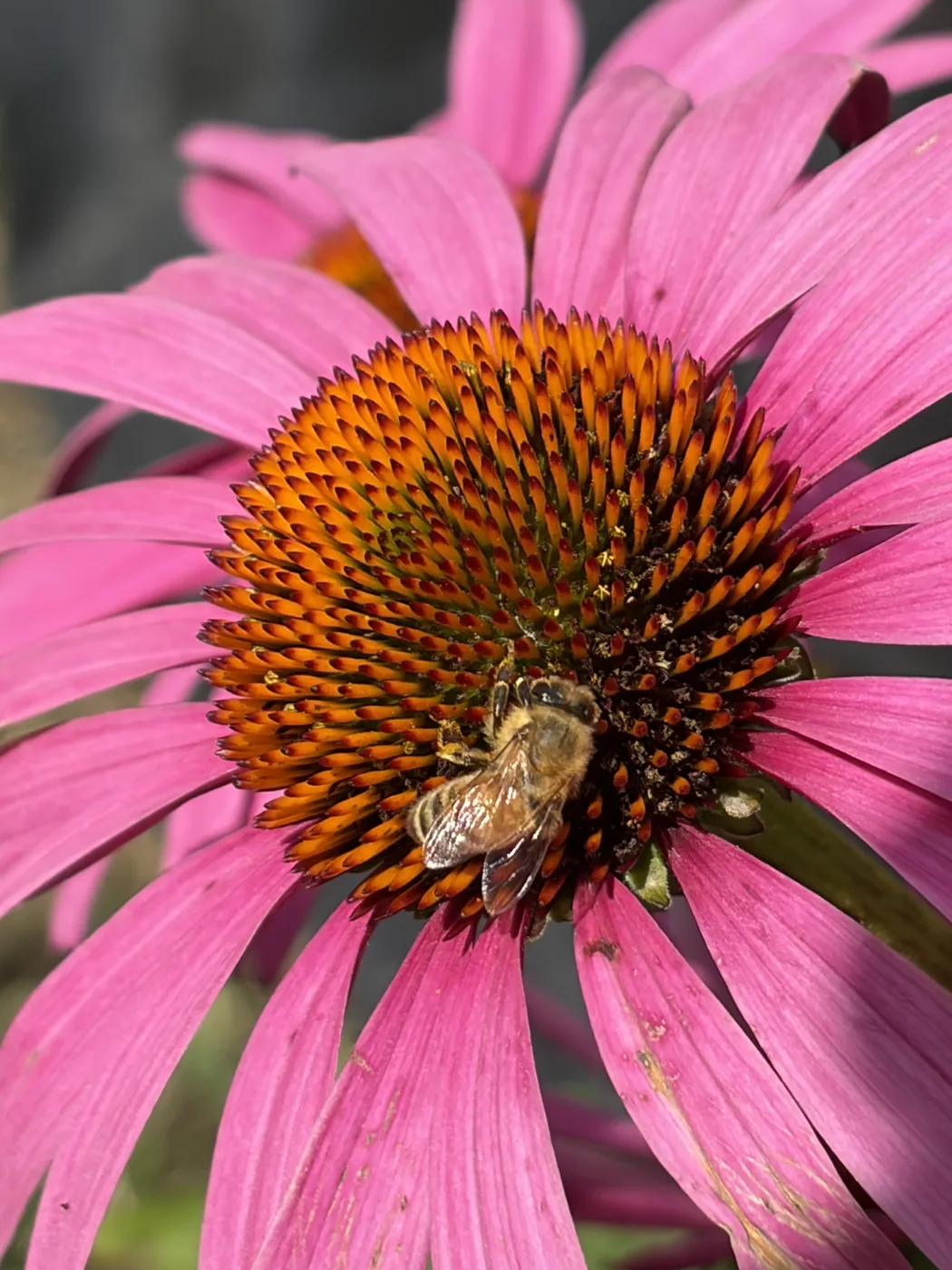
The bee everyone knows, and the only one we farm. A colony is tens of thousands of animals acting like one, dancing map directions to each other, and living in our own apiary hives right here in South Jersey.
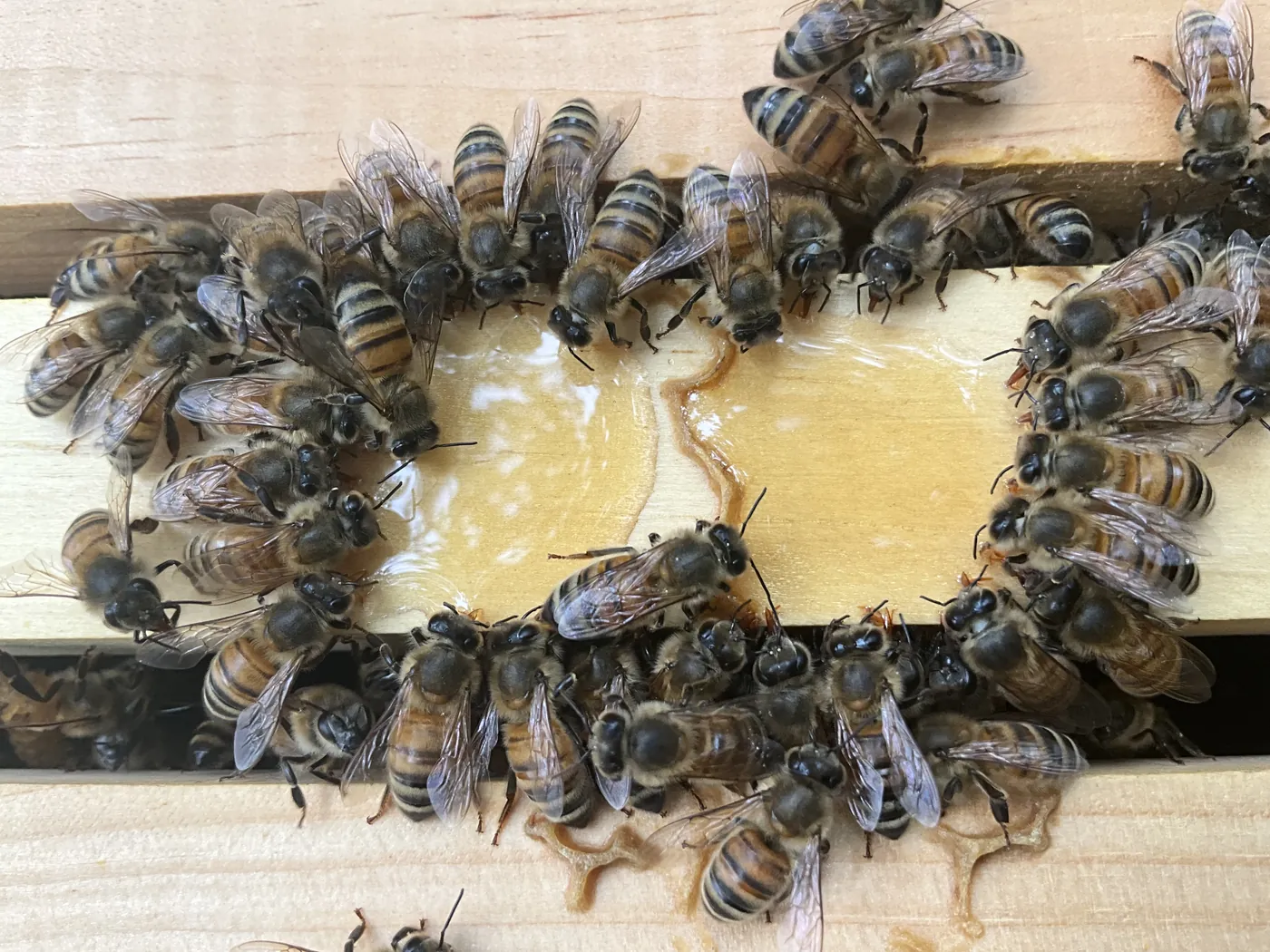
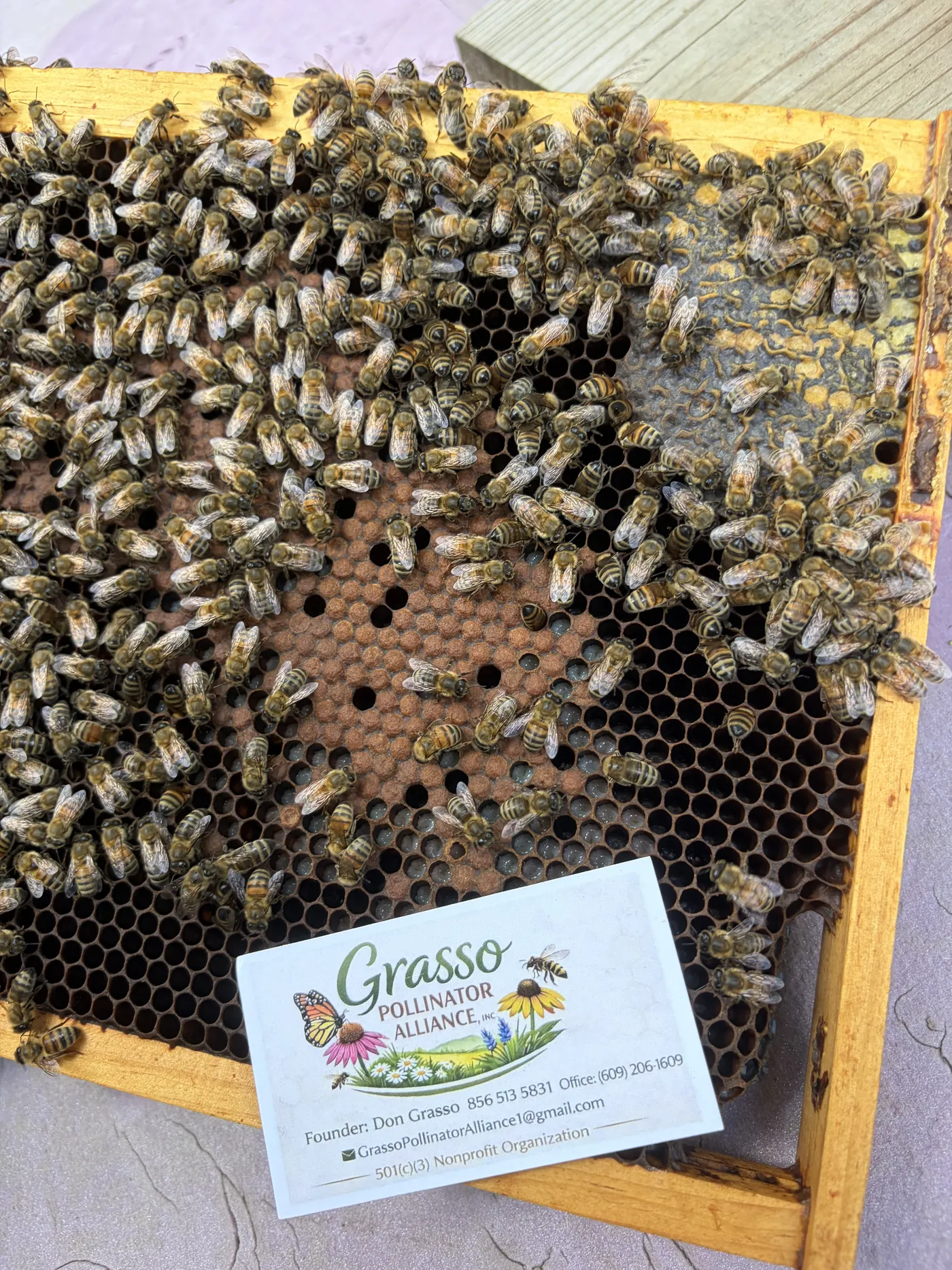
The honeybee is not native to North America. It came over with European settlers and stayed, and it became the backbone of American agriculture anyway. We keep hives ourselves, we teach from them at every event, and this page is the hive from the inside: what a colony really is, why it is in trouble, and the honest line between keeping bees and saving them.
Apis mellifera
No single bee is in charge, not even the queen. The colony itself is the animal, and it does things no insect should be able to do.
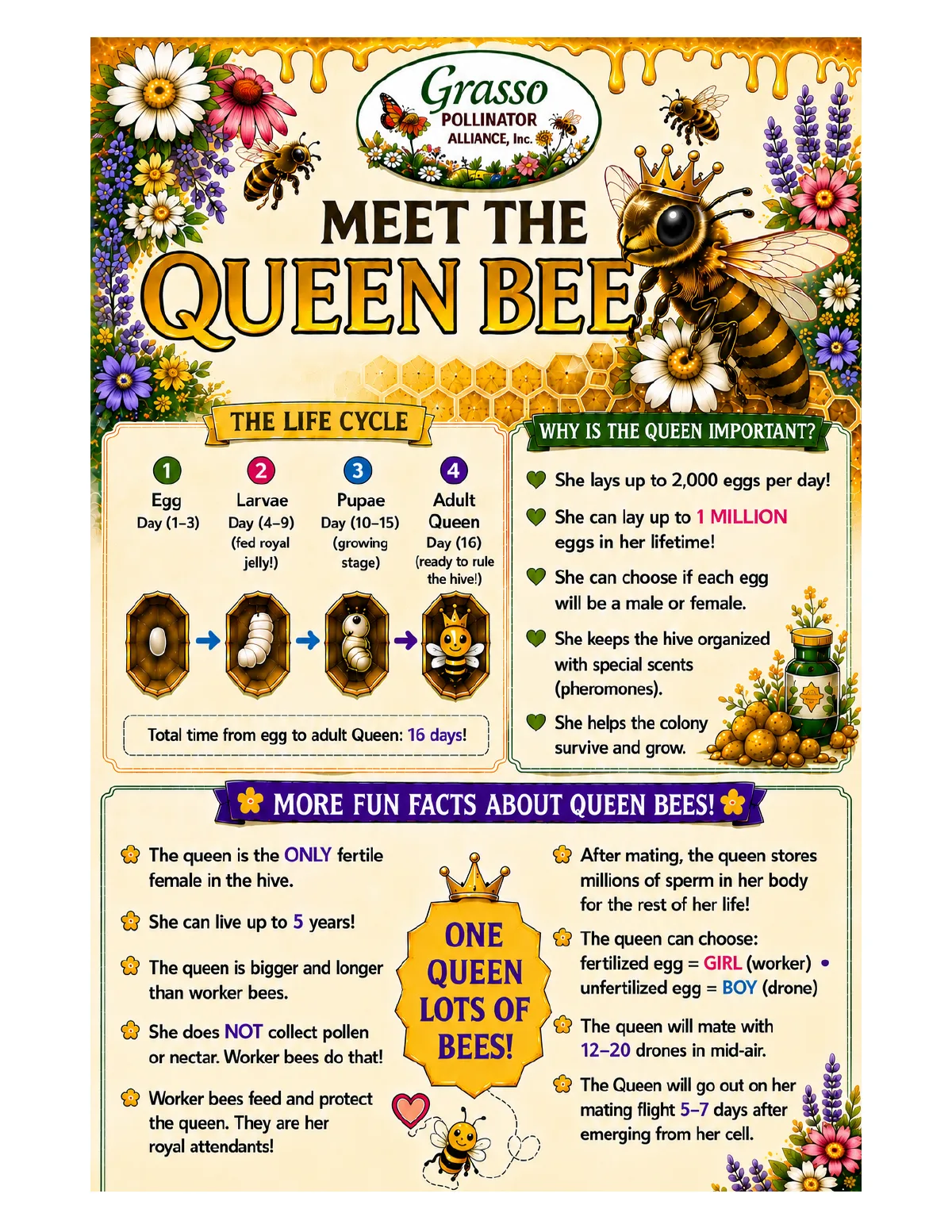
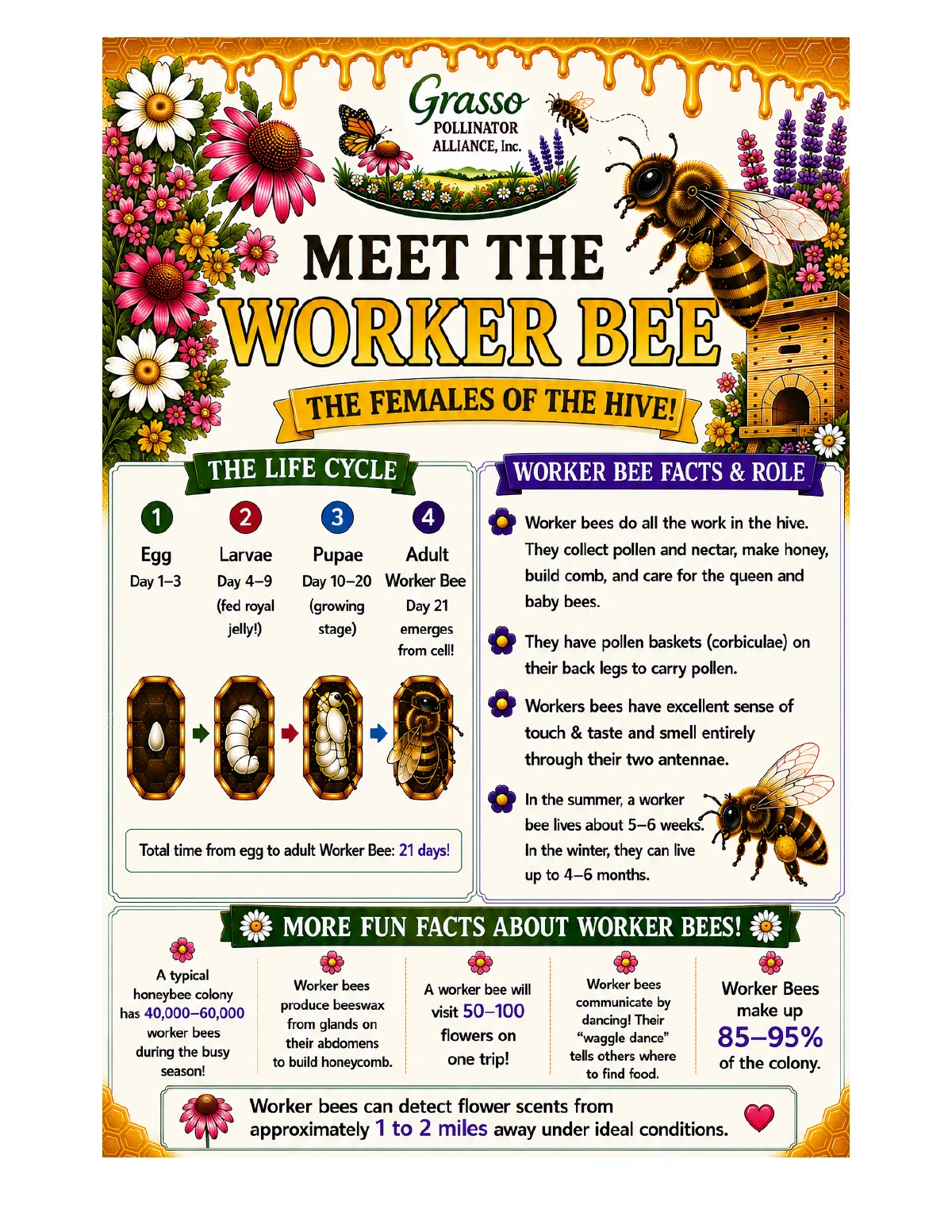
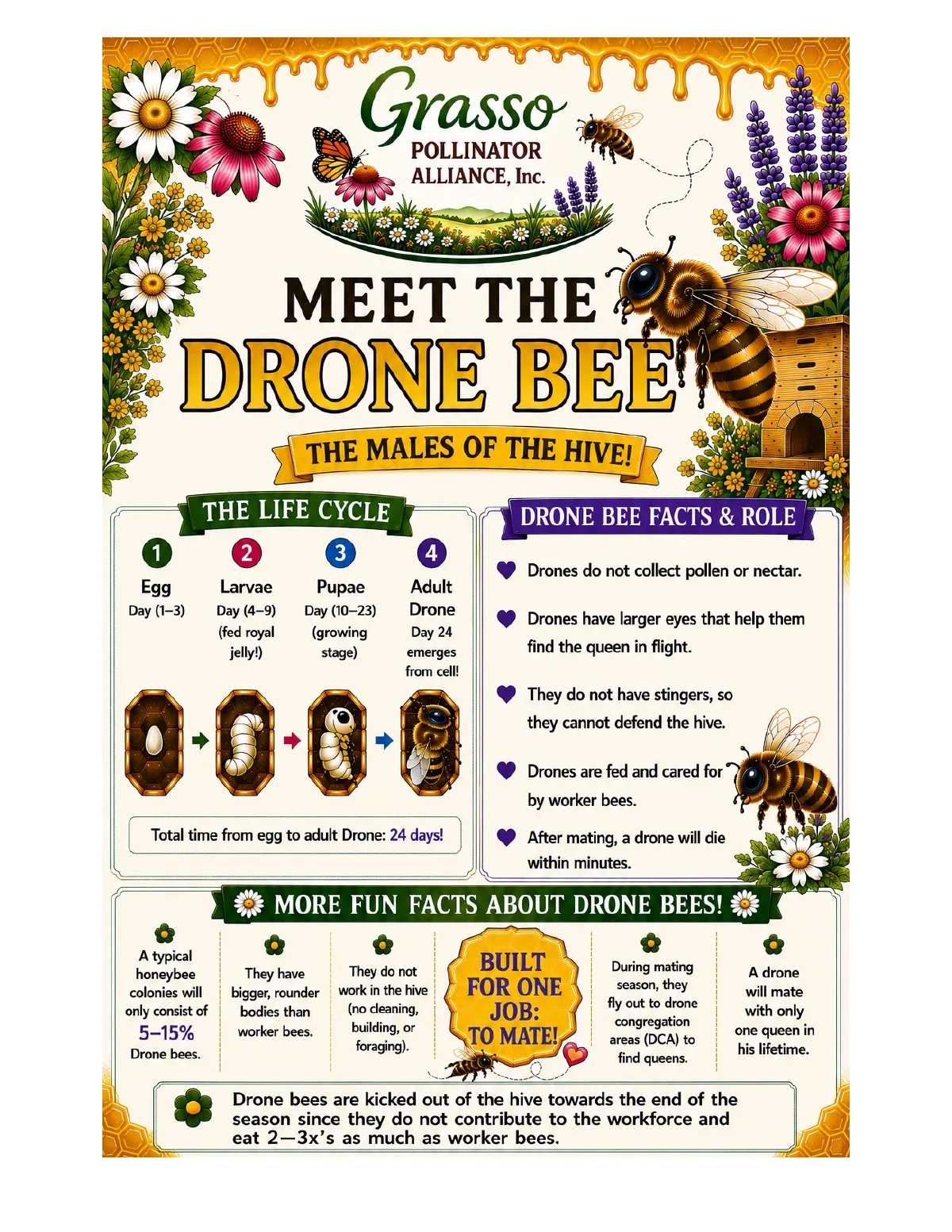
A summer hive runs on a strict division of labor. The queen lays, up to two thousand eggs on a good spring day. The workers, all of them her daughters, move through careers as they age: nurse first, then comb builder, then guard, then forager for the last weeks of a six-week life. The drones do one job, and it is not housework.
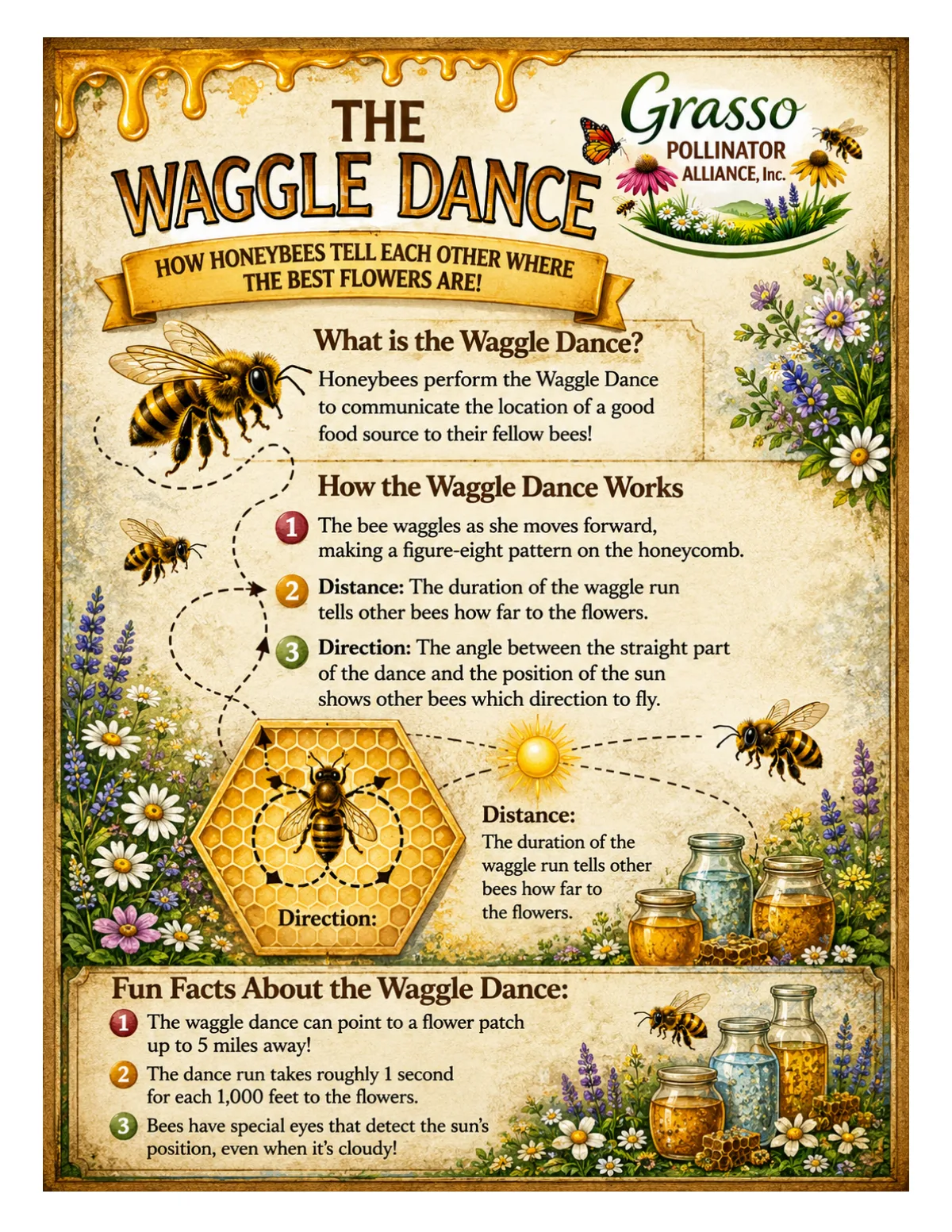
The famous part is true. A forager who finds good flowers comes home and dances, and the angle and length of her waggle run tell her sisters the direction and distance to the food, corrected for the movement of the sun. It is a map, danced in the dark, on vertical comb.
Winter is the trick most people never hear about. Honeybees do not hibernate. The colony pulls into a tight cluster around the queen and shivers its flight muscles for warmth all winter, holding the core around ninety degrees while it slowly eats the honey it spent all summer making. That honey was never a luxury. It is the heating fuel.
| Colony at peak | About 50,000 bees |
| Queen | Up to 2,000 eggs a day in spring |
| Worker's summer life | About six weeks |
| Foraging range | Two to three miles, routinely |
| Winter | Clusters and shivers; does not hibernate |
Agriculture and conservation, kept straight
The honeybee is livestock, brought from Europe centuries ago. Supporting it and supporting wild bees are related goals, not the same goal.
We run our own hives, and we love them. Honeybees are extraordinary animals, adding about fifteen billion dollars a year to American crop value. They are also in real trouble, with US beekeepers now losing roughly four colonies in ten in a typical year to parasites, disease, pesticide exposure, and poor forage.
But here is the part most pollinator talk skips, and we will not: a hive of honeybees does not save a single wild bee. Crowded colonies can pass parasites and disease into wild bumble bee populations and compete with them for food. Keeping bees is agriculture. Planting habitat is conservation. We do both, and we keep the two straight. New Jersey's three hundred and fifty wild species have their own page, and they earned it.
Want to know the hive from the inside? Our free printable Bee Field Guide covers the queen, the workers, the drones, and the waggle dance, one sheet each.
| Origin | Europe, colonial era |
| Status | Managed livestock |
| US crop value | About $15B a year |
| Typical annual colony loss | Roughly 4 in 10 |
Honeybees forage two to three miles from home, which means every yard in a South Jersey town is inside some colony's territory. What you do in yours reaches somebody's hive.
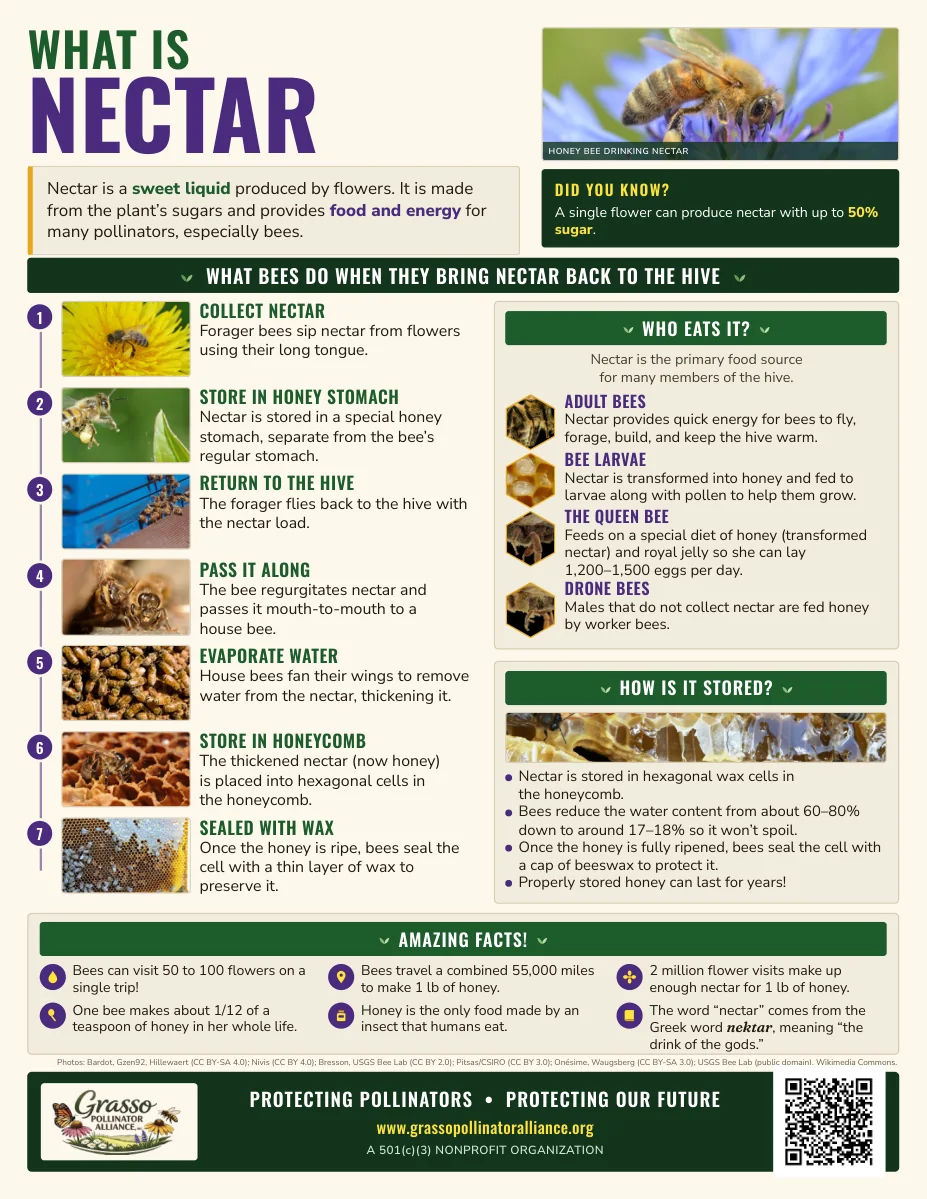
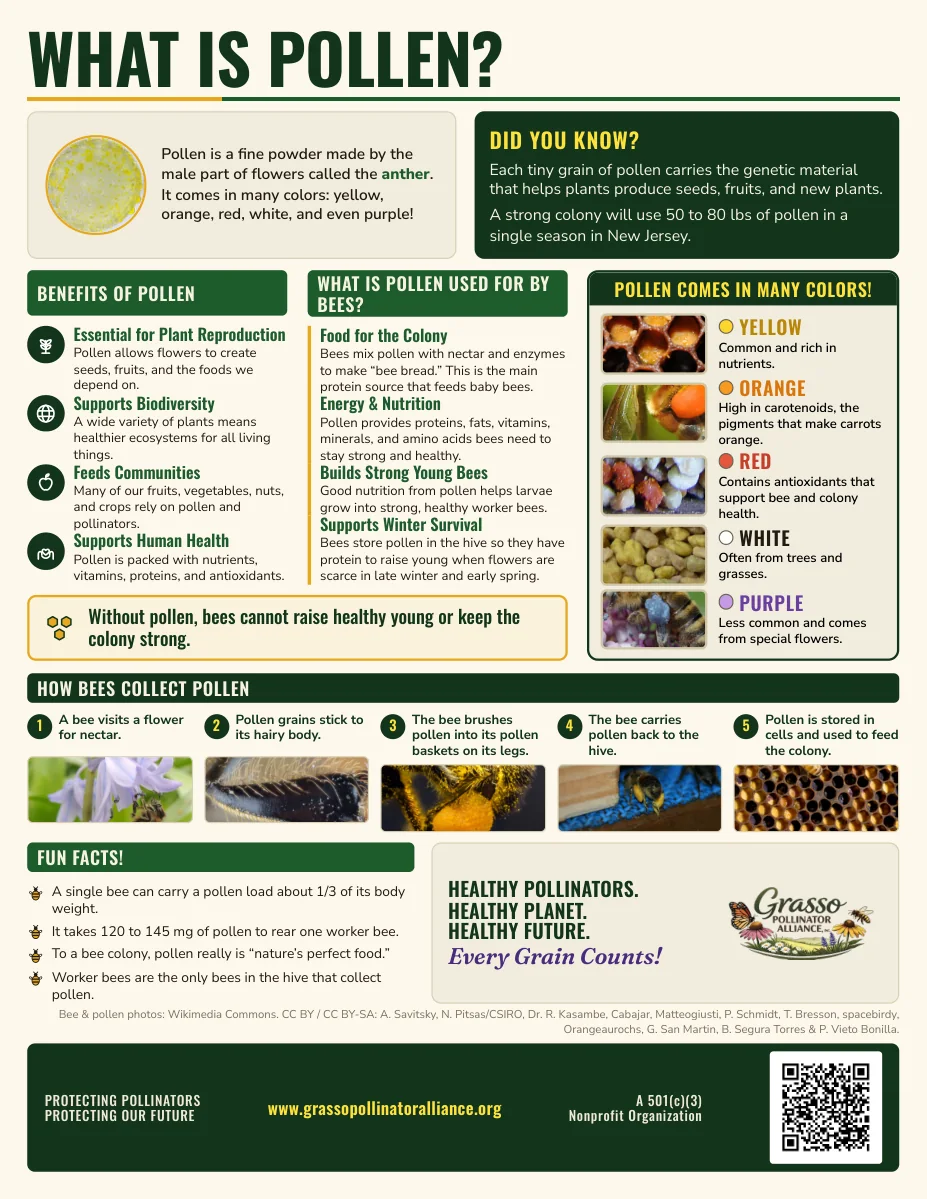
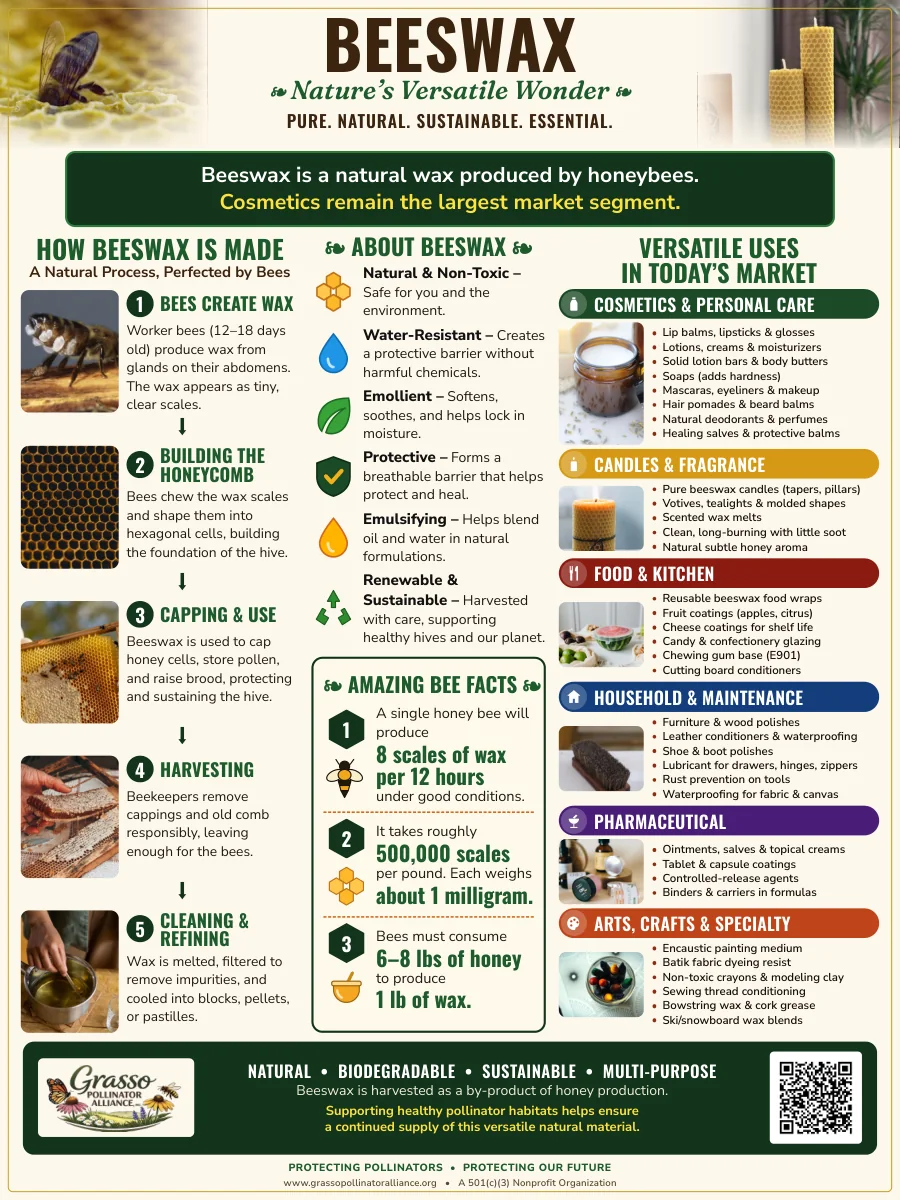
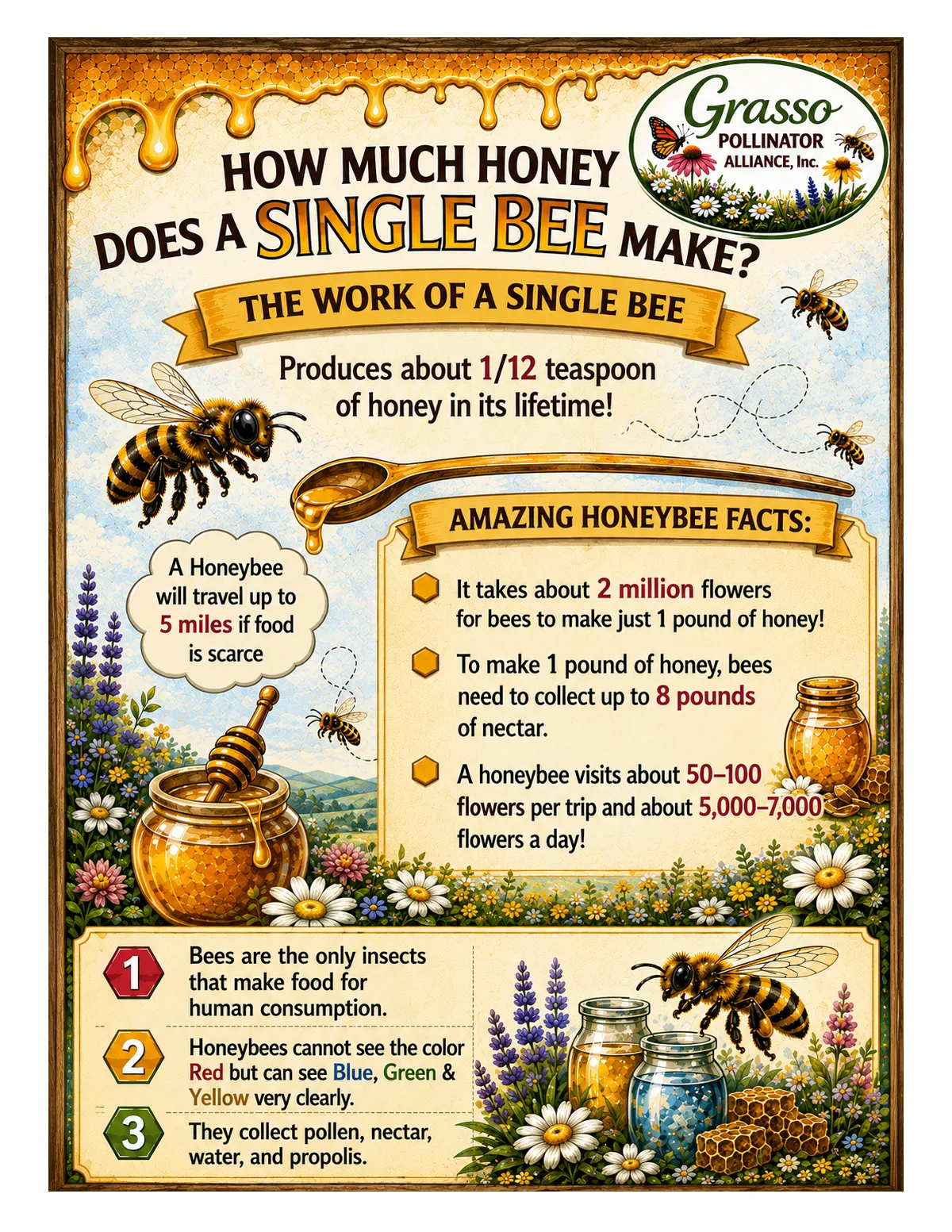
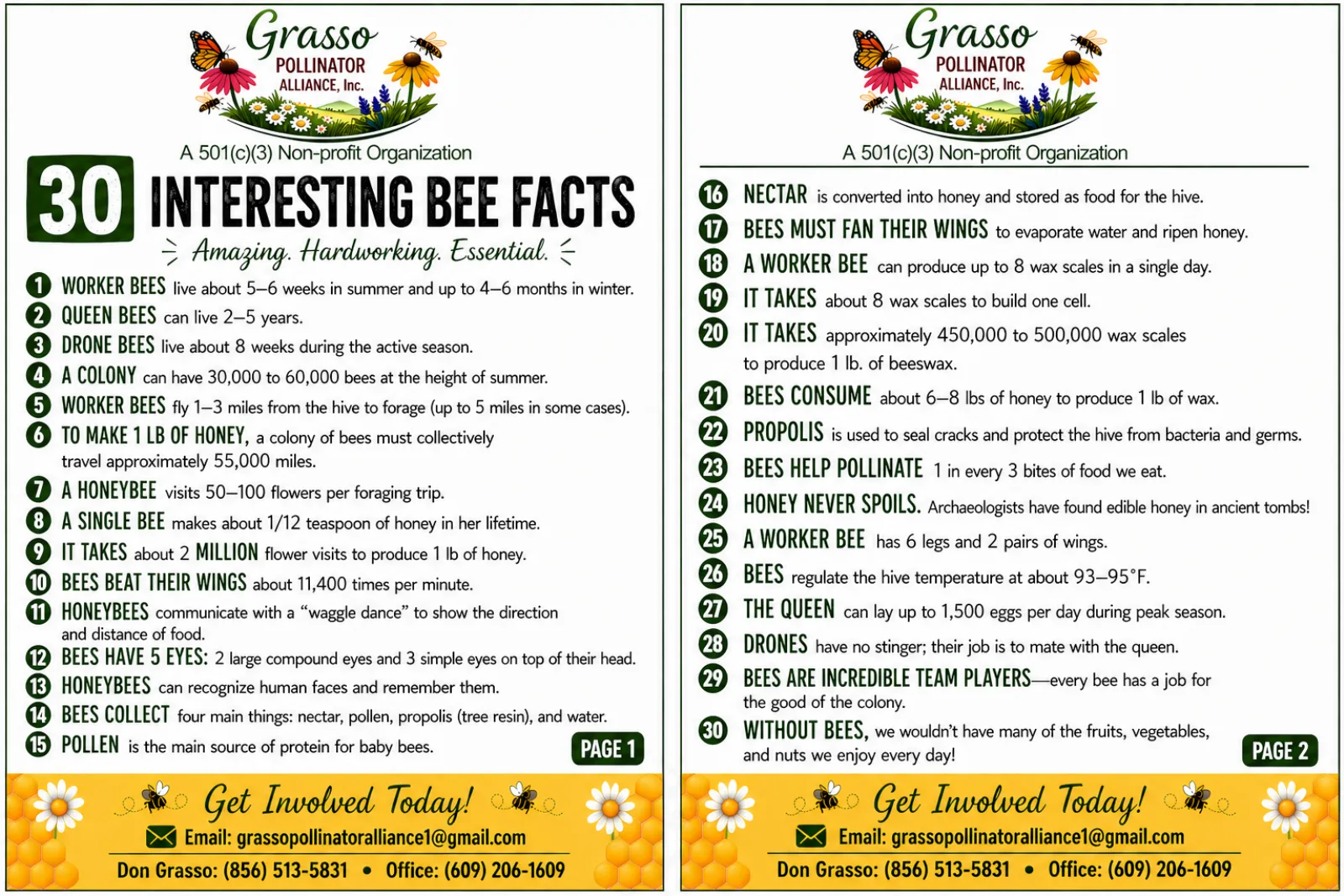
Everything on the hive in one place: how bees turn nectar into honey, what they do with pollen, how they make wax, the queen, the workers, the drones, the waggle dance, how much honey one bee makes, and thirty bee facts. Tap a poster to view it full size, or download the PDF.
Sponsor a hive and we handle the rest: we maintain the colony, extract the honey, and split it with you. Local businesses get their logo on the jar next to ours.
Sponsor a Hive